
I identify and invest in ideas and people long before they’re valued.
I’ve closely partnered with prominent founders of billion dollar tech companies by being a trusted contributor, a sounding board, predicting emerging markets and identifying new consumer patterns.
Based in the Bay Area, I am currently building Walmart Marketplace where I have executed billion-dollar bets since 2022.
Before Walmart, I was hired directly by CEOs in the South Indian startup ecosystem to solve pre- and post-PMF growth problems, helping teams scale to the $100M ARR milestone and eventual $10B IPO. My first role as a Product Manager came from a cold email.
My career is best understood as a sequence of contrarian bets before it became respectful:
- ChemE to Software: Moved from being a gold medallist in the most difficult1 stream of engineering — Chemical Engineering into a then obscure software product company straight out of college, against wishes of my professors, family members and peers
- Tech career in US without a master’s degree: Declined admits to top programs from top US universities including UC Berkeley, Duke, and Northeastern, choosing on-the-job learning over a master’s degree, which is uncommon2
- Radical transparency: Believe in transparent, direct communication and ask inconvenient questions early, a trait that is widely valued in theory in corporate environments but often3 discouraged in practice
Music
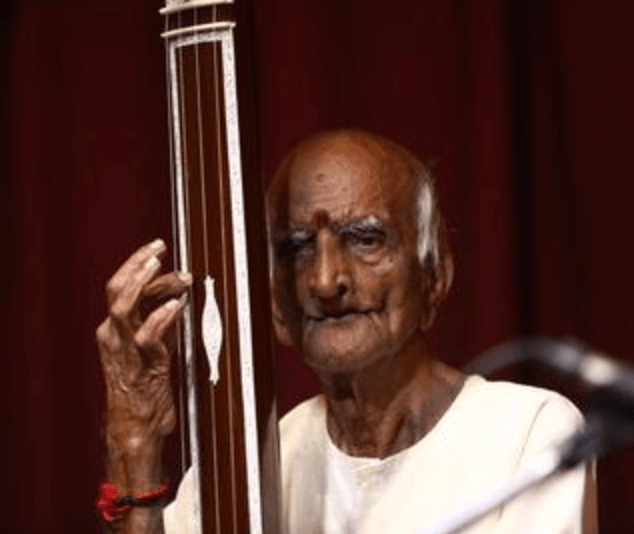
Like most South Indian Brahmin families that quietly assume Carnatic music is good insurance against both moral decay and the afterlife, I was enrolled early. At age of five, I began learning fundamentals under Vidwan Vellore Lakshminarayanan. What followed was a long, sincere pilgrimage through Mylapore, studying for several years with Rama Raghuram, briefly with violinist Charumathi Raghuram, and most significantly with Durga Venkatesh of the Sangeetha Kalanidhi D.K. Jayaraman lineage.
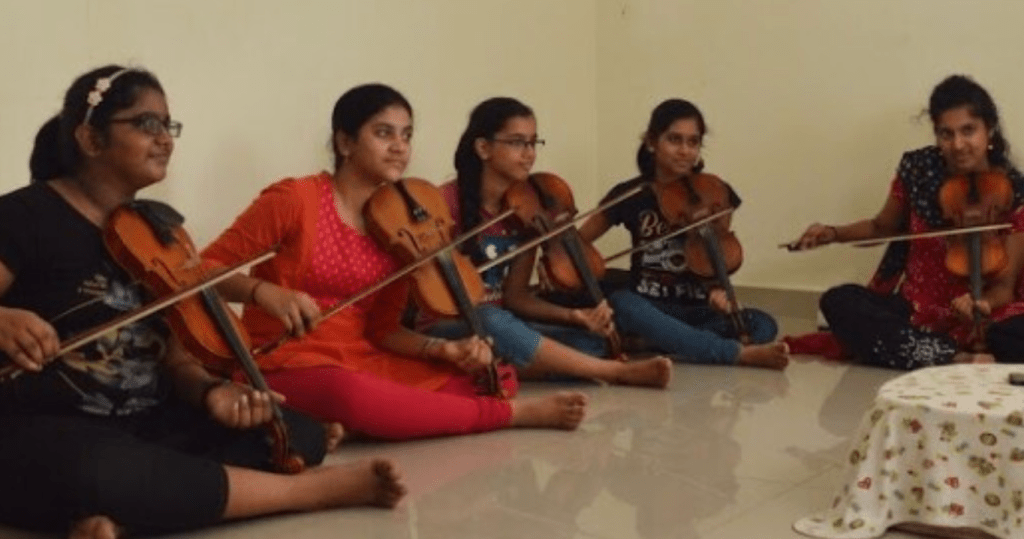
During my sophomore years in college, I developed a fascination with the violin. I showed up at the doorstep of Rajesh Kumbakhodu, a disciple of Padma Shri A. Kanyakumari, and asked if he would accept me as a student. He told me that he was willing to take me in but warned it would take at least seven years to be able to play a song properly. I agreed. It’s been a little more than seven years now and I can play keertanams and carry a persistent longing to return to formal learning.

Outside classical Carnatic music, I enjoy listening to and performing across genres. Alternative rock, rap, fusion, jazz and more. I took to learning music software, particularly GarageBand, and enjoy tinkering with loops and crafting original scores.
Today, music has retreated inward.
I occasionally teach younger children the fundamentals online, less as a profession and more as a quiet obligation to the tradition that shaped her patience, discipline, and keeping my mind fit.
My original music can be found on SoundCloud. A few renditions live on YouTube. Music has sort of disappeared from my identity since I moved to the US but I’m suspecting I may make a comeback in a different way! 🙂




This Blog
Observation Book is an ode to a rigorous student life, when seriousness was measured in ruled pages and we were expected to maintain something formally called an Observation Book, logging the results of endless lab experiments with no room for opinion. Student life eventually ended, but the habit did not. I now treat each day as an experiment, observing what works, what fails, and what pretends to work until examined closely.
I write about work, ambition, systems, learning, music, power, and the small, easily ignored human behaviors that quietly decide how lives and careers actually turn out
Like what I write?
Go on, follow my blog and make my day. 😊


1 – A major student-review–based study of over 2.8 million professor reviews and course difficulty assessments ranked Chemical Engineering as the hardest engineering major among typical U.S. engineering disciplines because it blends complex engineering fundamentals with advanced chemistry concepts that are difficult to master
2- 57% of H-1B workers now hold a master’s degree or higher, making decision to build a tech career without one an intentional and uncommon choice
3 – A Gallup study found that only about 3 in 10 U.S. workers strongly agree that their opinions count at work, meaning most employees feel their voice doesn’t truly matter
 Observation Book