Prologue
This has taken a lot of courage to share. Part of me believes that giving too much of yourself away is inviting weakness. But this story has lived in me like fog — heavy, unshakable. I finally found the courage to speak it, because silence itself costs too much.
Recently, I took time off from work. Not a holiday, not an escape, but a deliberate pause to face the grief I had kept compartmentalized in my mind.
In that quiet, I realized something important: by changing myself in small ways — by refusing to overlook negligence, by insisting on precision, by being sincere, accepting changes — I was also changing the lives of those around me.
The little acts of negligence can snowball into irreversible ends.
The Commute That Shaped Me
For seven and a half years in Chennai, I lived a routine many would have found intolerable.
36 degrees Celsius Chennai heat and a 45-mile travel are not for the faint-hearted. Not just these numbers but also people in the commute made every single day a nightmare for me especially as a woman. As someone from a conservative traditional family, “venting” about all the nightmares I bravely faced during the commute was not an option. That would mean I’d have to quit my job.
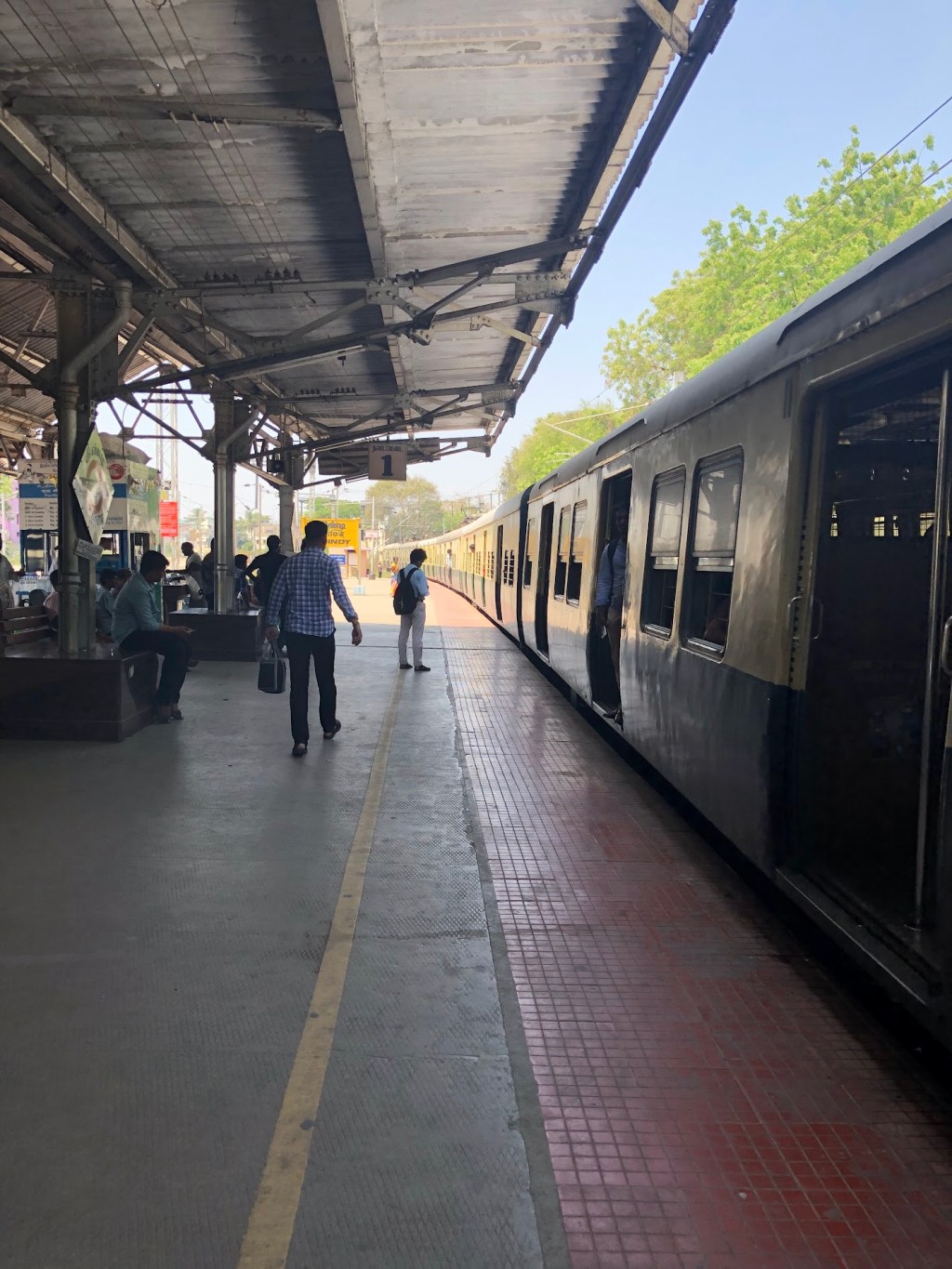
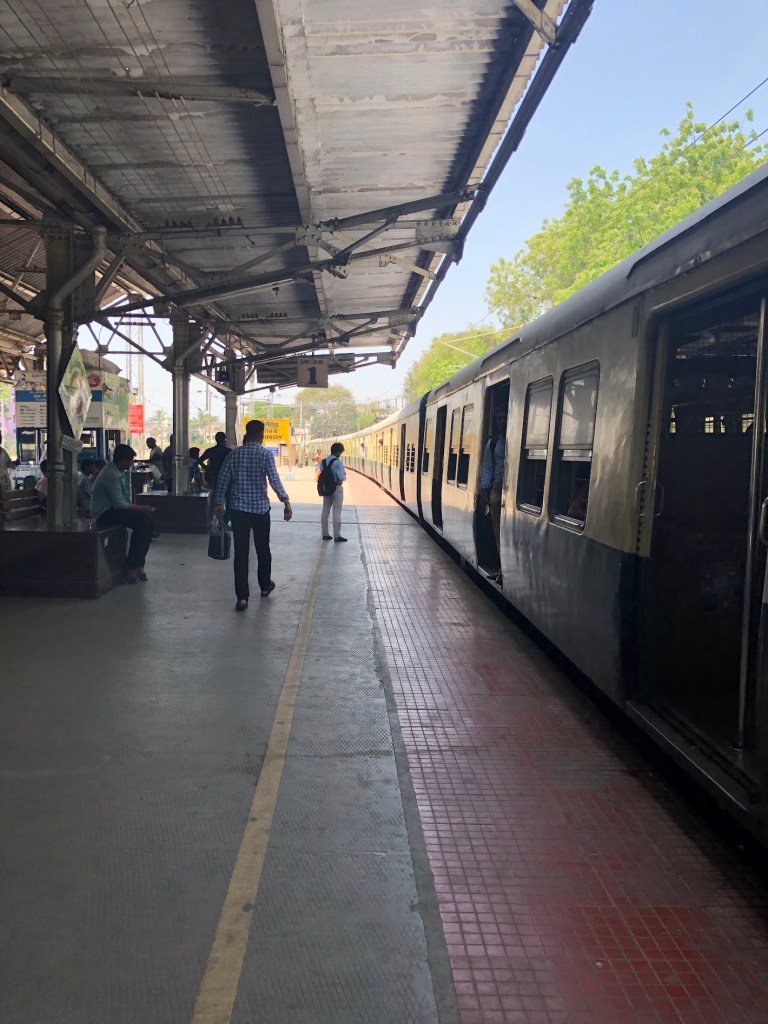
From Mylapore to Guindy by a crowded bus, then a crowded train to Tambaram. If luck favored me, a shuttle to Guduvanchery awaited; if not, another local train.
45 miles, every single day. Four hours commuting. Ten hours working. The rest was sleep.
(Today, people feel wow-ed that I show up at my office 7 am PST, every single day. You now know why it’s easier for me – I showed up even when my commute was in hostile conditions)
My mother warned me it would consume me, but I pushed ahead. Pride made me stubborn. Or let’s say, I was 100% married to the companies I worked for and glorified self-sacrifice.
I tolerated it because I thought the passion carried me. The exhaustion, the noise, the constant crossing of tracks, the so many things broken and uncared for and you need to walk past it without feeling too much about it — I told myself it was all part of the price for doing something that mattered when I love something.
Those tracks were constant. Unmanned, ordinary, treated as invisible. My colleagues and I crossed them in conversation, in a rush, without hesitation. Four trains a day, year after year. The odds of disaster were high, but when risk becomes routine, it fades into invisibility.
The Call That Changed Everything
Cut to March 25, 2023, trains stopped being background noise.
A Saturday morning call told me that my brother — nineteen at the time — had been struck by a train near his hostel in Coimbatore.
I was in my apartment in Sunnyvale making myself a hot cup of coffee.
At first, I wanted to believe it was nothing more than a stumble and my parents were exaggerating things.
A slip while disembarking. Something recoverable.
But each call that followed chipped away at that hope. Even those who were with him during the incident didn’t fully know what had happened.
CT scans arrived. The doctors at the hospital weren’t giving a clear picture on what it meant while my family stayed right outside the doors, waiting for some signs of hope.
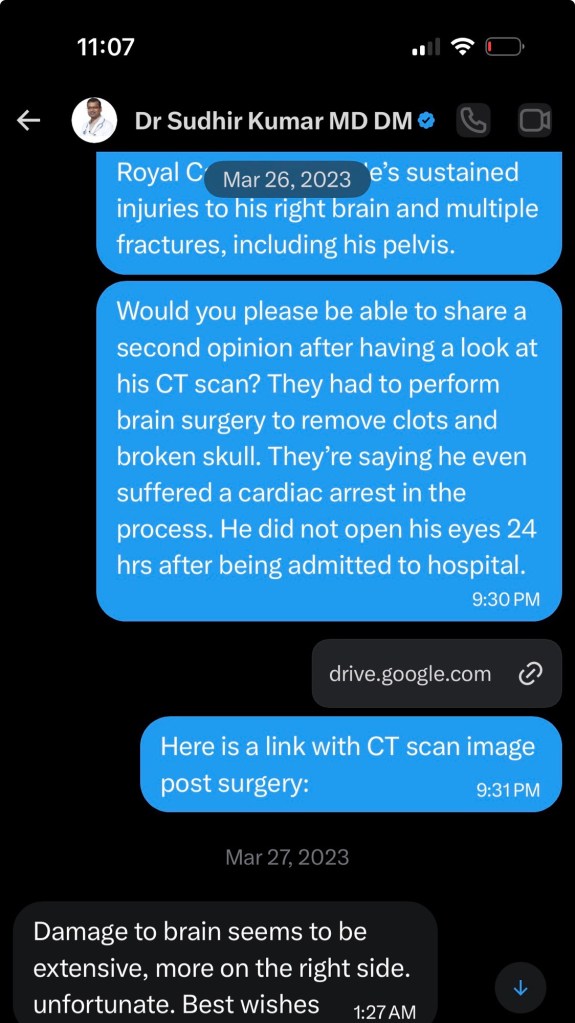
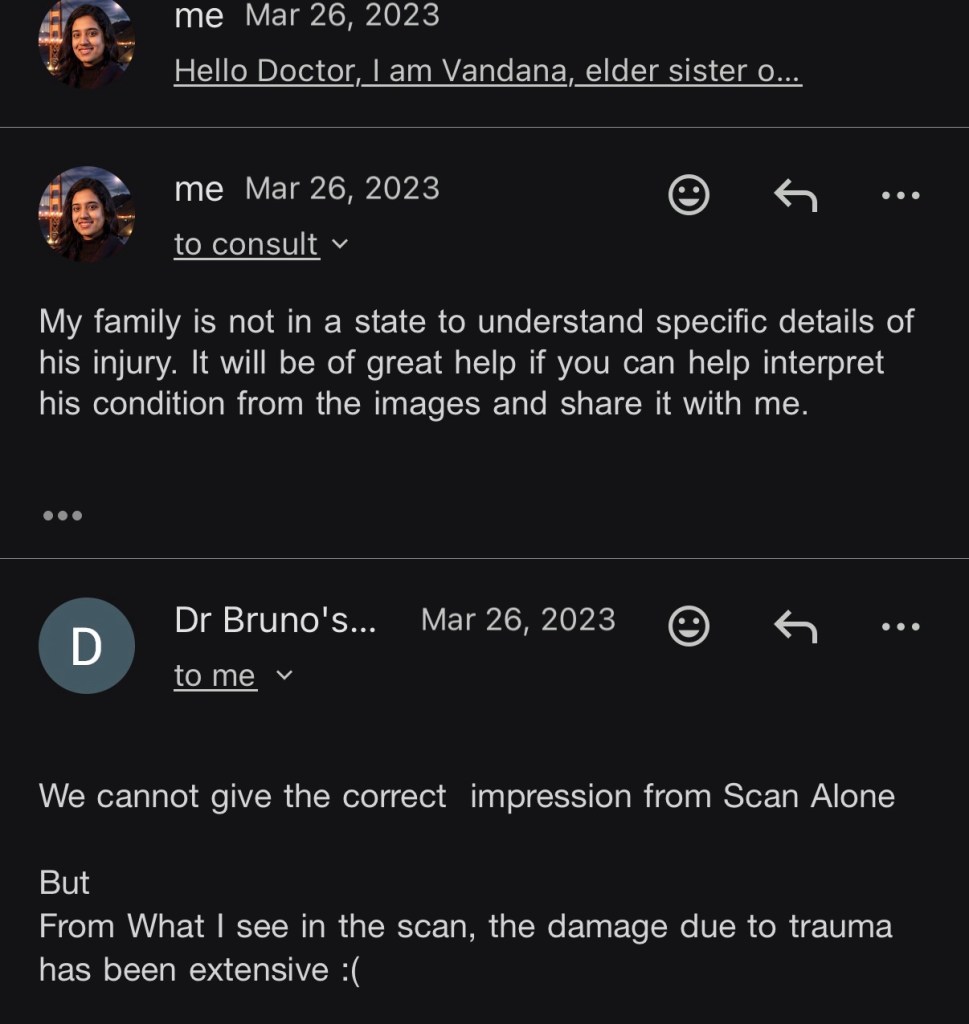
I sent the scans to neurosurgeons on Twitter, searching for a contradiction, a miracle. Every one of them said the same thing: there was no chance of survival.
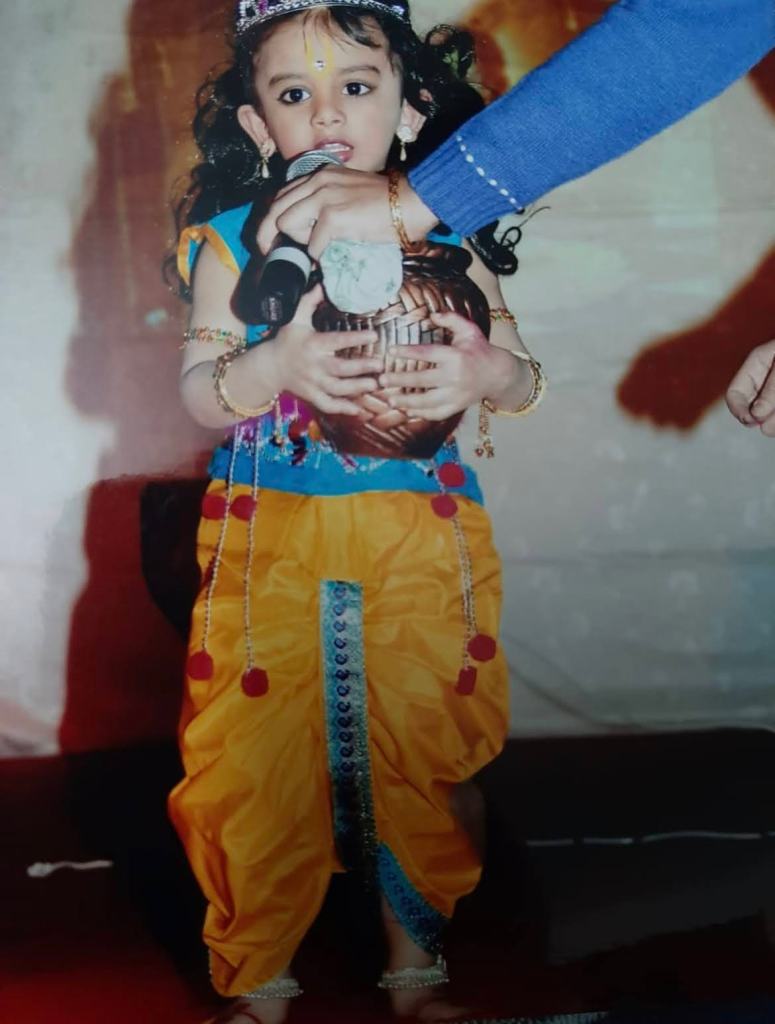
Gaura as little Krishna.
My Brother
His name was Gaura Hari.
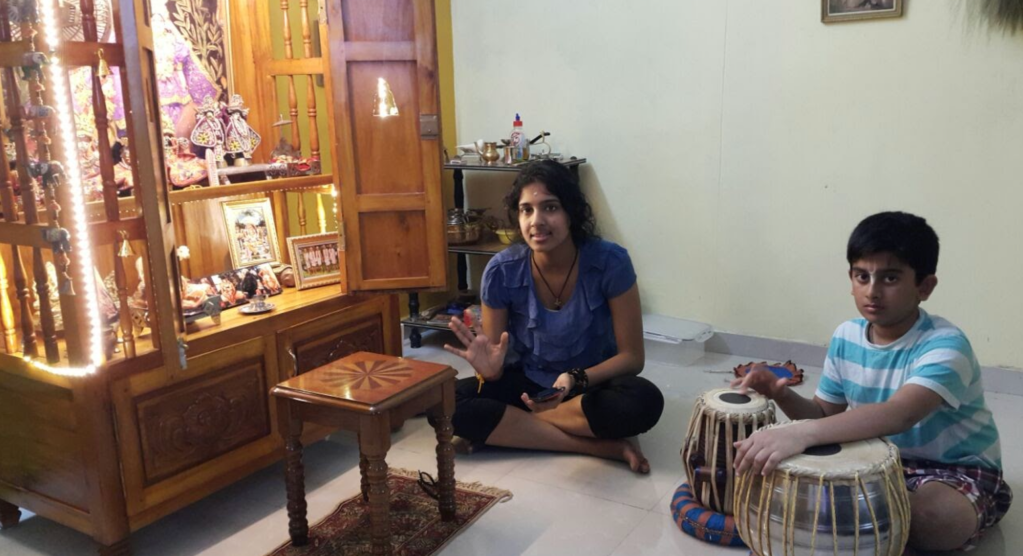
He was gentle. Soft-spoken. The kind of boy who never argued, never imposed himself on others. At two, he could recite the Ramayana and the Bhagavad Gita. At four, he played the tabla by instinct. He was born with a spirituality beyond his years.
At nineteen, he was studying Artificial Intelligence in Coimbatore. He believed in technology, in its potential to change the world. The last time I saw him was at my wedding. He asked for nothing from me except a pair of black Adidas shoes from America. I brought them back gladly.
That March night, he went with friends to watch a movie. They planned to celebrate a birthday afterward. It should have been a simple, uneventful journey back. But the tracks intervened.
Questions Without Answers
In the weeks that followed, I felt like a character in Manu Joseph’s The Illicit Happiness of Other People, where a father circles endlessly around the unanswered questions of his son’s death. That was me — searching, circling, never finding peace.
Did another train block his view?
Was he wearing headphones?
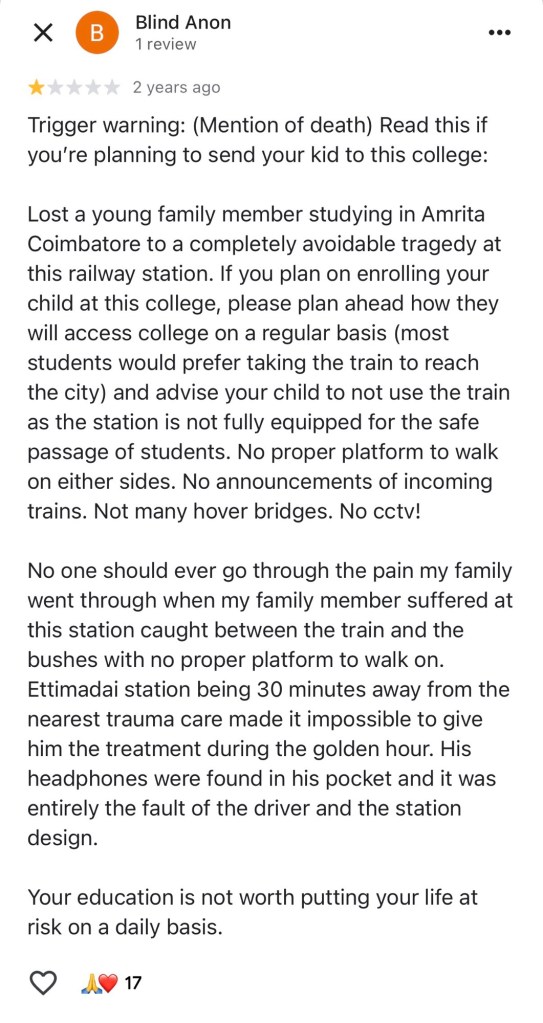
Why was there no footbridge, no cameras?
Why did his friends take him to a small campus clinic unequipped for trauma, instead of rushing to a hospital that could save him?
Did the doctors act out of genuine hope, or just for the formality of “trying”?
And then there were the more personal questions, the ones that hurt the most.
I knew my brother. He was not careless. He would not have missed an oncoming train. Did someone push him? Did someone try to steal from him?
Or are these questions futile, because there may have been a part of him I never truly knew?
Despite such incidents happening in the past, why didn’t anyone act sooner?
Why did we not check about the college?
Why were students allowed to walk past unmanned crossing?
What exactly happened?
The Hospital From Afar
Even from across the ocean, I absorbed the trauma secondhand. My family was inside one of the best hospitals, surrounded by hundreds waiting in the halls, waiting for updates. Every call home tore at me.
That was when I learned something about death: only in death do you see the full measure of the life someone lived.
My brother had considered, at one point, renouncing worldly life altogether and becoming a saint. His sincerity, consistency and overall relentlessness to pursue his faith had built him a community of well-wishers from the International Society of Krishna Consciousness (ISKCON).
Thousands prayed for him on Zoom. Friends, classmates, devotees. His sincerity had touched people far beyond our family.
Somewhere in this process of experiencing what could be the worst grief ever, to lose someone so dear and so younger than you, I began to feel intense anger toward spirituality or the concept of “God”.
What wrong had this boy done to deserve such an end? What karma could justify this?
I can only pray that the pain was brief. That his suffering lasted no more than seconds.
Anything more is unbearable to imagine.
Mourning
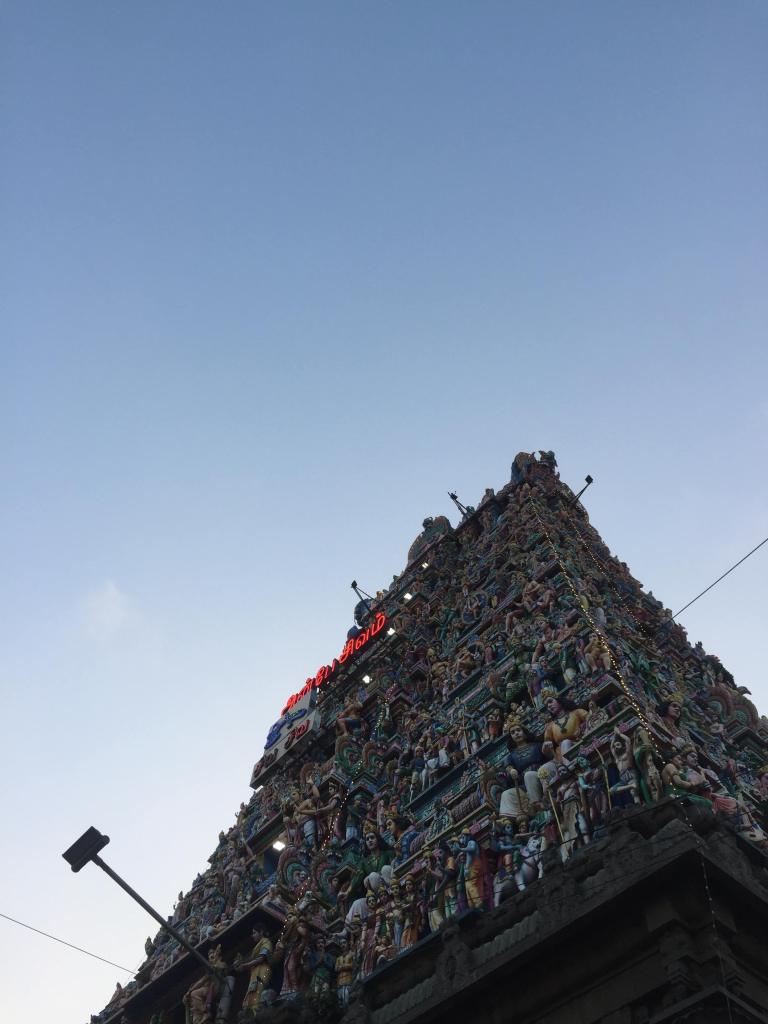
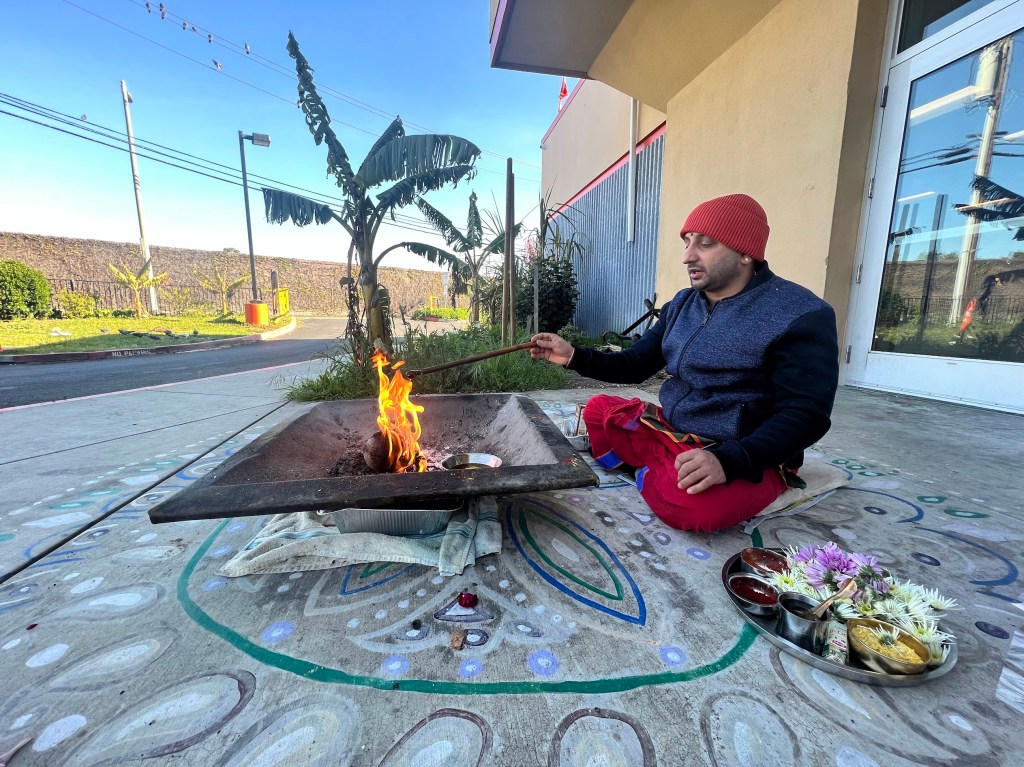
On the third day, I went to the Sunnyvale Hindu temple. My eyes were swollen from crying. I asked the priest to perform a Mruthyunjaya Homam for my brother. At six in the morning, I carried water in circles around the temple, my body heavy, my voice unsteady.
I thought of our last outing together — December 2016, Sathyam Theater, watching Moana. That memory has become a stone I carry.
That same morning, I fainted. My body collapsed under the weight of what my mind had tried to hold up. I remember sending a message to my team: I fainted this morning, I need the day off. As if fainting were like a dentist appointment. As if grief could be scheduled. I missed a PRD walkthrough for a key project.
Later, I gave myself a longer break. Not for vacation. Not for escape. But to survive. To let the grief move through me, to allow the lessons to settle.
Distance
The very next day, right after the day I heard the news about my brother’s injury, an immigration lawyer told me I had been selected in the H-1B lottery.
In another life, that would have been a milestone. But leaving the U.S. during processing would void my application.
My parents told me to stay. They reminded me I had a one-year-old child, and that my presence would not change what had already happened. But it meant something unbearable: I could not be there with my family for my brother’s last rites.
It remains my deepest regret till date.
Acceptance
I tried all sorts of things to get him out of my mind. Therapy, talking to friends and family. I went through a phase of re-directing every fiber of my being into work cutting myself off from my family. Not even music helped. Everything had some part of him in it.
Two years after the loss and when I was on a short break from work, I worked up some courage to visit the Mountain View Iskcon temple.
I visited it imagining I’d reached the stage of grief called acceptance. Oh boy. I was so very wrong. I bawled my eyes out the second I heard the name Gaura in one of their prayer songs. I had to explain my sudden crying to people around and how angry I’ve been at God and I haven’t gone back there ever since.
How Grief Changes You
Grief does not leave you as it found you. Birth and death, when they come close, changes so much in you. It’s hard to explain unless you’ve witnessed both up close.
Before, I tolerated small errors, harmless chaos, missed deadlines. Now, I cannot. I see how little mistakes compound, how negligence left unchecked becomes tragedy. Even my own mistakes – I end up tolerating myself less
Many tasks in life create the illusion of progress without real impact. If I’m reprimanded for missing those, so be it. As someone on an H-1B visa, it’s difficult to push back on ridiculous tasks and hold on to your job if you don’t have a supportive environment.
My breaking point (to take a break) came when I received non-stop messages from 8 pm to freaking 3 am in the morning to make 1000th revision on a doc all because they didn’t understand Marketplace 101 and decided to frame their incompetence as my shortcoming.
Thanks to my therapist, I took a mental heath break from the chaos of musical chairs at work to make peace with things I’d sacrificed in the process. No one knew I about what I had lost – a bit of my own humanity I’d say because I couldn’t be there with my family.
My tolerance for mediocrity has shrunk. My intolerance for negligence has sharpened.
Some of these events both personal and at work have completely transformed me in terms of my focus, bias for action, going deep into root causes systematically, being authentic to myself and others and most importantly not leaning on someone else’s reputation to build mine.
When you’ve experienced extreme loss coupled with environments that constantly undermine you, you should thank yourself for those experiences
Lives Lost: U.S. and India
It isn’t just my family’s story. Around the world, thousands of lives are lost each year to trains.
- In the United States, there were 954 railroad deaths in 2024, with 6,542 nonfatal injuries. Most fatalities weren’t derailments, but ordinary incidents — people trespassing or misjudging crossings. Highway-rail grade crossings alone saw 2,260 collisions, 261 fatalities, and 762 injuries.
- In India, the scale is staggering. The National Crime Records Bureau reported over 20,000 deaths from railway accidents in 2022. In 2021, more than 16,000 people died in nearly 18,000 railway accidents. Year after year, small acts of negligence at unmanned crossings, poor infrastructure, and preventable oversights claim thousands of lives.
The comparison is sobering. The U.S., with stronger rail safety systems, still loses nearly a thousand lives a year. India, with weaker safeguards, loses twenty times that. Behind every number is a family like mine.
Reflection
I’ve seen how Artificial Intelligence transforms e-commerce: predicting what shoppers want, personalizing experiences, and optimizing billions of decisions every day.
Yet the same technology that helps us buy faster and easier could also help us live safer:
- Sensors and cameras powered by AI can detect trespassing on tracks in real time
- Algorithms can flag high-risk crossings and predict accident hotspots
- Automated alerts can warn communities before tragedy strikes
The irony cuts deep: my brother was studying Artificial Intelligence. He believed in its promise. It might have saved him.

During Rail Safety Week, I remember my brother. I remember fainting in my living room, trying to turn grief into a simple message to colleagues. I remember learning the hard way that small negligence can snowball into irreversible loss.
This was his last journey. Remembering him at nineteen is not only an act of grief but a plea — that we notice the risks we normalize, that we hold ourselves to higher standards, and that we prevent more families from carrying silence where a voice should have been.
And there are things each of us can do:
- Stay alert near tracks and crossings. Trains can’t stop quickly, but you can.
- Never take shortcuts across tracks. What feels like saving minutes can cost lives.
- Obey signals and warning signs. They exist because others didn’t make it home.
- Report unsafe conditions. A broken gate, a missing sign, a malfunctioning signal — reporting it may save someone’s life.
- Talk to your children and community. Safety is cultural; awareness grows when we speak of it.
Small acts of vigilance can prevent the irreversible. This week, and every week, when you see tracks — think train.
 Observation Book